Case study
Lake Albert, Wagga Wagga
A 125 hectare lake that a council had spent more than a decade trying to keep open. Five units went in during February 2025. This is what the independent testing found over the thirteen months that followed, including the January 2026 closure and reopening.
What happened at Lake Albert
The film
The lake
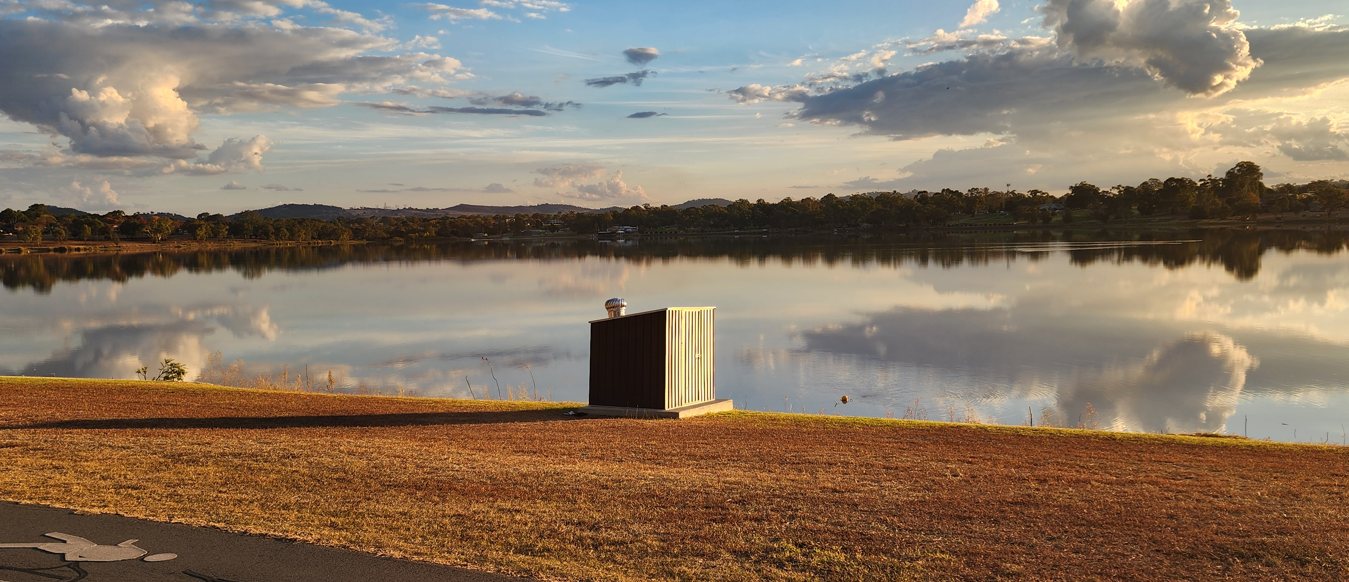
Lake Albert is an artificial lake of 125 hectares at Wagga Wagga in New South Wales. It carries water sports, fishing, walking and bird watching, and the Boat Club and the Wagga Wagga Country Club golf course both sit on it.
It also blooms. Cyanobacteria, blue-green algae, which can be toxic, returned often enough that the lake was closed to recreational use for stretches of the summer, the months it is most wanted. Hydro2050's own account of the project puts the cost of those closures at an estimated thirty million dollars a year to the local economy.
Wagga Wagga Council had been at this for over a decade. Copper sulfate, enzymes and sonic resonance had all been tried. The blooms kept coming back, worst in peak summer.
What went in, and where
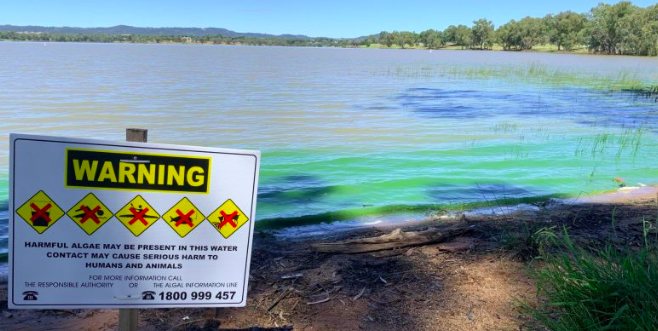
Wagga Wagga Council engaged Hydro2050 for an initial six month trial. Five Hydro systems were deployed in February 2025, at the five points around the lake where the blooms had historically been strongest.
The system generates oxygen and ozone on site from the air, and injects them into ultra-fine bubbles of less than one micron. Below that size the bubbles do not rise and break at the surface. They stay in suspension, carry a negative charge, and spread through the water body. The ozone breaks back down to oxygen, so nothing is left in the water to remove.
The first summer
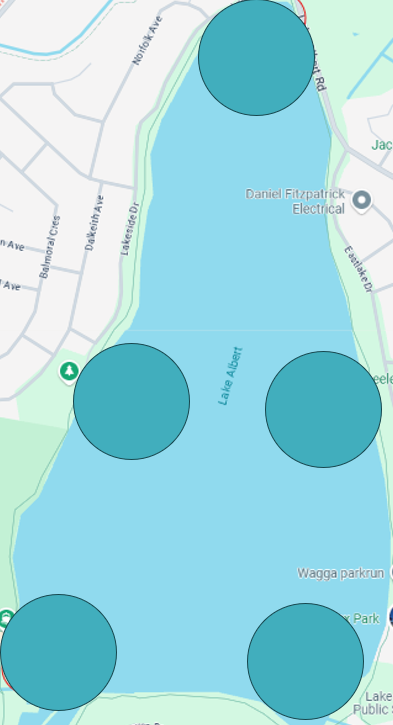
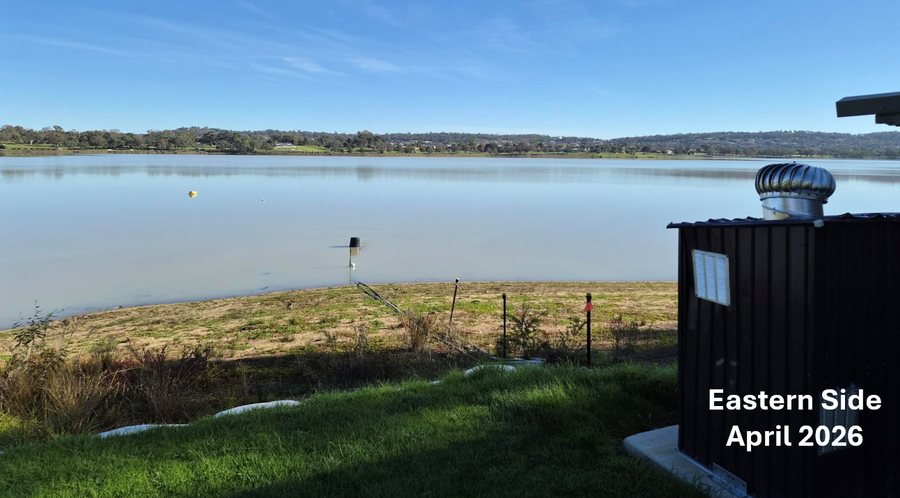
The lake was blooming while the units were being installed. It came under control quickly after they started, and the photographs taken in February and March 2025 are the same three locations a month apart.
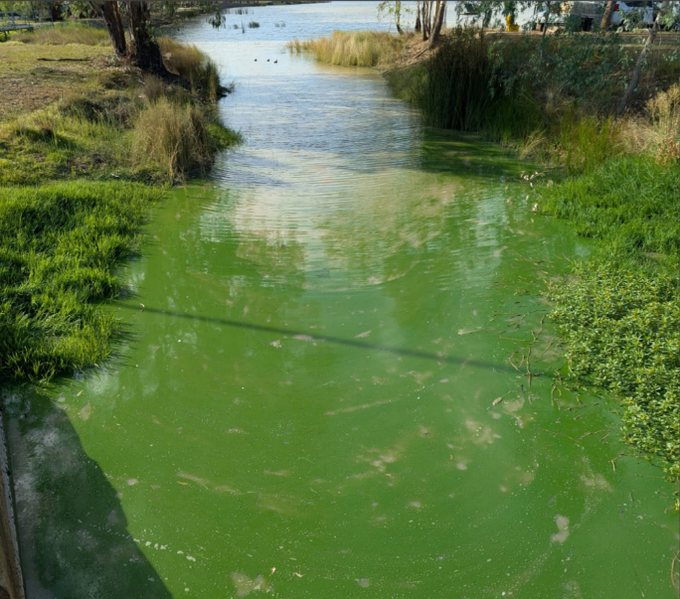
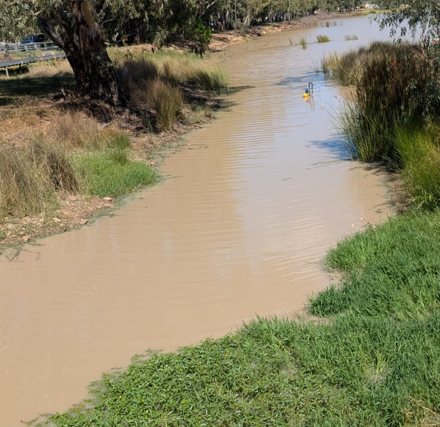
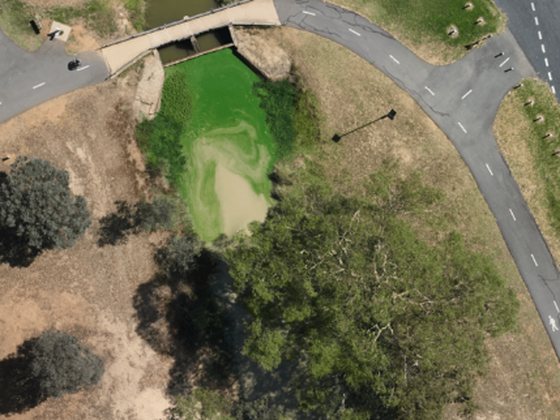
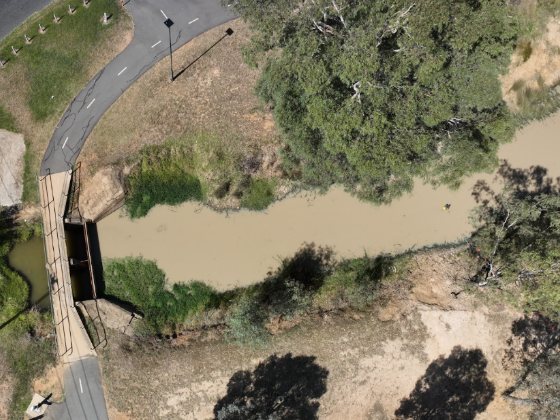
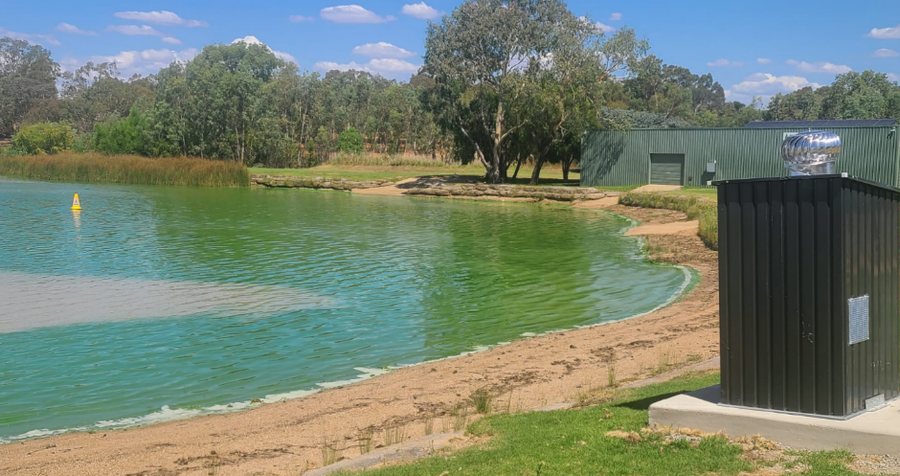
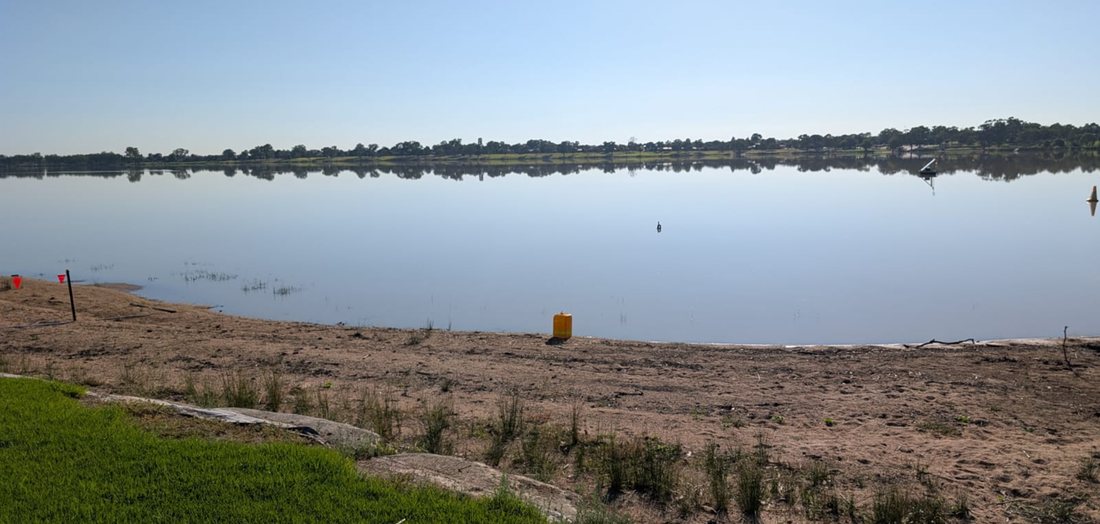
Six months in, the council extended the trial. By November 2025, nine months of treatment, the counts had gone below the lowest band on the guideline scale.
What was measured, and by whom
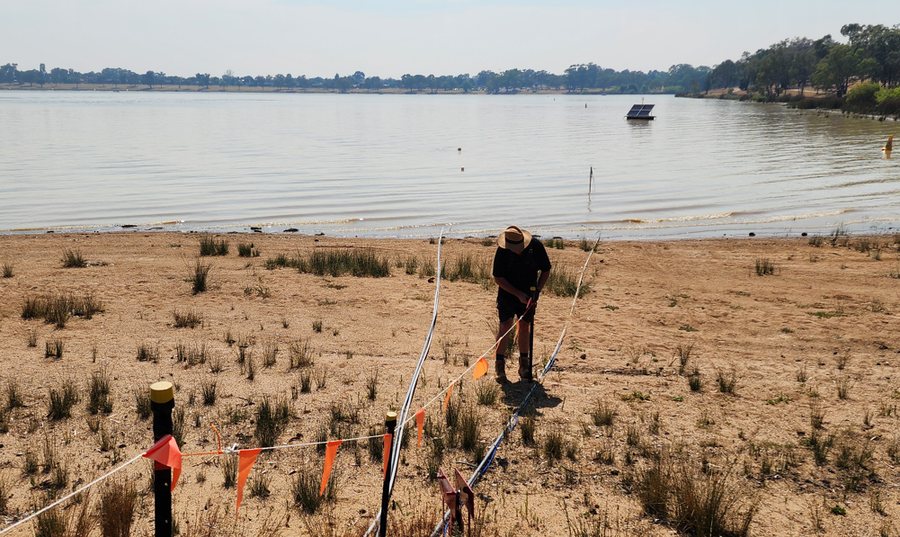
Sampling was done at three points, the Boat Club, Lake West and the Swimming Area, and the samples went to ALS, an independent laboratory. The measure is a total blue-green algae cell count in cells per millilitre.
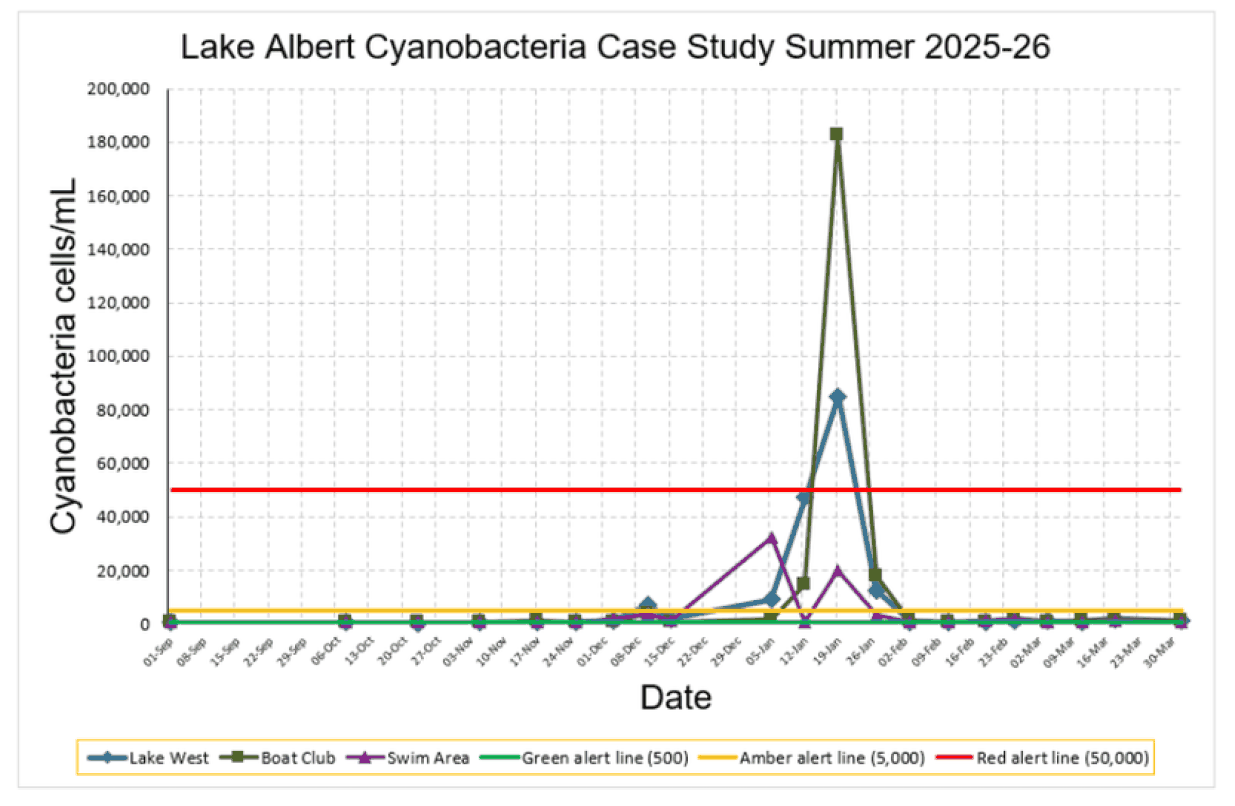
Cyanobacteria event brought under control
The Hydro2050 systems kept Lake Albert virtually free of cyanobacteria from installation in March 2025 through to December 2025. In comparison, Lake Albert had previously experienced cyanobacteria blooms during hot and cooler months.
In December 2025, cyanobacteria levels began to rise. Investigation showed that vandalism had cut gas lines on two units and that declining lake levels caused by drought conditions had temporarily reduced the effectiveness of some Hydro2050 equipment.
This equipment downtime corresponded with the significant cyanobacteria bloom spike in early January 2026, a very hot month. Hydro equipment was repaired and relocated to deeper water in mid-January 2026, after which cyanobacteria blooms were quickly brought under control both visually and by cell count. With the equipment fully operational, cyanobacteria levels were maintained at safe levels for the remainder of the 2026 summer.
Cyanobacteria alert level guide
No alert
Below 500 cells/mL
Green alert
500 to 5,000 cells/mL
Amber alert
5,000 to 50,000 cells/mL
Red alert
Above 50,000 cells/mL
The January 2026 closure and reopening
Between late December 2025 and mid January 2026 the counts climbed from green to amber and the lake was closed. Three things happened at once.
1
The lake dropped. A hot, dry summer pulled the water back far enough that units sitting in what had been deep water were in shallows, or out of the water altogether. Less water also means less dilution, so the nutrients that feed a bloom concentrate.
2
Equipment was tampered with. On inspection the gas lines had been cut in two places, so no gas was reaching the water, and someone had made a sustained attempt to pull the electrical conduit out of the cabinet. The air lines have since been run inside conduit to make them harder to reach.
3
The weather did what it does. Very hot air, warm water, and a concentrated nutrient load are the conditions cyanobacteria want.
Hydro2050 went back between 10 and 12 January with new pumps and longer power cables, 60 metres at the Boat Club, Lake West and Lake East, 45 metres at the north and a second run at the Swimming Area, so every unit could be moved into deeper water. A sixth unit went in temporarily at the Swimming Area, where the count was worst at 32,469 cells per millilitre.
The lake was closed just after that work finished. Reopening required two consecutive tests below red. The 27 January test came back amber, the 3 February test came back green at an average of 704 cells per millilitre, and the lake reopened on 6 February 2026.
From the 8 January peak to the 3 February green reading is twenty-six days. The remedial work finished on 12 January, so the recovery took a further twenty-two days from there to the first green reading, through an amber test on 27 January at an average of 11,168 cells per millilitre.
Wagga Wagga Council decision, continuation of the Hydro2050 system
Hydro Lake Restoration System had demonstrated success in keeping Lake Albert healthy and open to the public during peak demand times and clear throughout the remainder of the year.
The cyanobacteria trial reduced bloom risk, kept the lake usable, demonstrated rapid recovery, and showed the need for continuous operation. Based on the success of the 12 month Hydro trial, and the limitations of previous approaches, Wagga Wagga Council has contracted Hydro2050 on a long-term basis to maintain Lake Albert's water quality and control cyanobacteria blooms.
Benefits for councils experiencing poor water quality issues
For other councils with water bodies experiencing harmful algal blooms, the Lake Albert trial highlights several practical benefits.
- Reduced risk of recreational closures during peak summer periods
- Improved protection for residents, visitors, pets and wildlife
- A non-chemical treatment approach suitable for public waterways
- Rapid response capability if cyanobacteria levels rise
- A long-term operating model that can be adapted to lakes, ponds, reservoirs and other managed water bodies
Dams, lakes and ponds
Lake Albert is one lake. The same problem sits in a lot of standing water.
The case studies page carries nine others, including three more South Australian water bodies, and every one of them now has a page of its own.