Case study, dams, lakes and ponds
Nitrogen nutrient reduction in water, Jubilee Lake
The Jubilee Lake trial demonstrates that Hydro2050's oxygen and ozone nanobubble treatment was associated with a substantial reduction in nitrogen-based nutrients, alongside visible algae control and improved water clarity.
What the Jubilee Lake nutrient analysis found
How it was measured
Independent water analysis was undertaken by Tea Tree Gully Council during the Jubilee Lake trial. Three samples were collected, before treatment, during treatment and a further ten days on, to evaluate changes in water quality.
Nitrate
6.64 mg/L before treatment on 27 October, 0.630 mg/L on 7 November, 0.657 mg/L after treatment on 17 November. Down 90.1%.
Total nitrogen
5.53 mg/L before treatment, 3.71 mg/L during treatment, 2.58 mg/L after treatment. Down 53.3%.
Nitrite
Below 0.001 mg/L at every sample. Remained extremely low.
Ammonia
0.009 mg/L before treatment, 0.015 mg/L during treatment, 0.003 mg/L after treatment. Down 66.7%.
The results
The standout result was nitrate, which fell from 6.64 mg/L to 0.657 mg/L, approximately a 90% reduction. Total nitrogen also declined progressively, falling from 5.53 mg/L before treatment to 3.71 mg/L during treatment and ultimately to 2.58 mg/L, an overall reduction of approximately 53%. Unlike nitrate, which experienced most of its reduction relatively quickly, total nitrogen continued to decline after the treatment period, suggesting that changes within the lake continued after active treatment ceased.
The nutrient reductions occurred alongside other substantial changes in lake condition. Dissolved oxygen increased rapidly: at the midstream monitoring location it rose from 8.1 ppm to 21.4 ppm after only two hours of treatment, demonstrating the ability of the nanobubble stream to migrate through the water column and increase oxygen levels away from the treatment outlet.
The lake's pH also moved from 9.2 to 7.9, representing a shift toward neutral conditions.
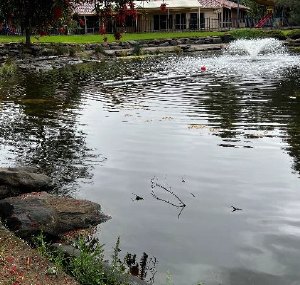
Visually, these water-quality changes were accompanied by a marked improvement in lake condition. At the start of the trial, the water was black, the lake bottom was not visible and heavy algae was matted throughout the water column. During treatment the water clarified, the lake bottom became visible and algae was substantially reduced.
Tea Tree Gully Council analysis, 27 October to 17 November
6.64 to 0.657
Nitrate in mg/L, down 90.1%
5.53 to 2.58
Total nitrogen in mg/L, down 53.3%
8.1 to 21.4
Dissolved oxygen in ppm, after two hours
The impact
The Jubilee Lake trial provides a strong proof of concept for Hydro2050 as a treatment approach for nutrient-loaded and algae-affected water bodies. The key impacts demonstrated were strong algae suppression, major nitrogen reduction, rapid oxygenation, improved water clarity, improved pH, benefits that continued after treatment, and a chemical-free treatment approach.
Dams, lakes and ponds
Nitrate down 90%, and a council prepared to be named for the analysis.
The algae control side of the same Jubilee Lake trial is set out separately, alongside Willunga Dam.