Case study, horticulture and aquaculture
Improved irrigation water quality, horticulture, SA Tomatoes
Hydro2050 conducted a trial at SA Tomatoes to assess the effectiveness of the Hydro2050 technology to improve irrigation water quality.
What the SA Tomatoes irrigation trial found
Why water quality matters here
Water quality is a critical factor influencing horticulture productivity. Poor water quality can reduce yields, impact plant health, increase disease risk, restrict water reuse opportunities, and increase operating costs.
The challenge
The water being trialled was of poor quality and not suitable for horticulture application without treatment. The water presented three key issues.
Low dissolved oxygen
Initial dissolved oxygen was only 4.95 mg/L, well below the trial's target of more than 20 mg/L. Low dissolved oxygen can lead to poor root growth, reduced nutrient uptake, less productive plants and higher risk of root disease.
High microbial and pathogen loading
Untreated water contained an average of 32,500 colony forming units per millilitre. High pathogen load can lead to increased disease pressure and losses.
Algae contamination and regrowth
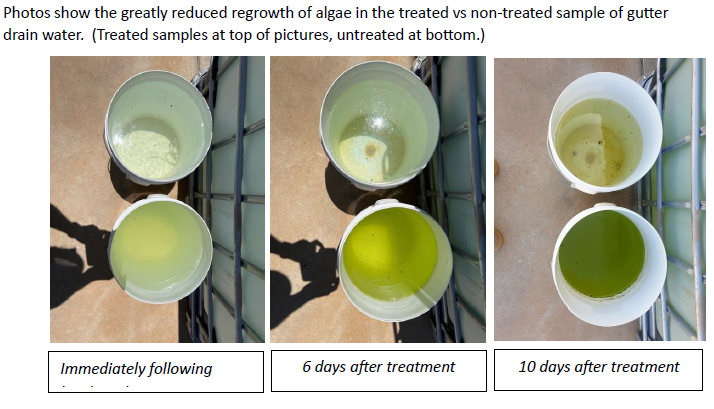
Algae was present in the untreated water, creating a need for both immediate control and suppression of subsequent regrowth. Algae growth restricts or blocks irrigation lines and emitters, causing uneven water and nutrient distribution.
In summary, the challenge was to develop an effective way to disinfect and highly oxygenate the untreated water, thereby improving its suitability and benefits for intensive tomato production.
The results
The SA Tomatoes trial demonstrated strong improvements in untreated irrigation water quality.
Rapid oxygenation
Dissolved oxygen increased from 4.95 mg/L to 30 mg/L in approximately 20 minutes, reaching 41 mg/L after 30 minutes.
Sustained oxygen levels
Dissolved oxygen remained elevated after treatment, above 30 mg/L, for at least three days.
99.9% reduction in CFU
Mean colony forming units fell from 32,500 CFU/ml to 35 CFU/ml by the time 30 mg/L dissolved oxygen was achieved, and to 33 CFU/ml post-treatment.
Effective algae control
Algae was eradicated at treatment, with significantly reduced regrowth in treated water compared with untreated water over the following days.
The trial water, before and after
4.95 to 41
Dissolved oxygen in mg/L, after thirty minutes
32,500 to 33
Colony forming units per ml
Overall, the Hydro2050 treatment simultaneously oxygenated the recycled water, reduced microbial CFU to barely detectable levels, and controlled algae and its regrowth, demonstrating its potential to substantially improve irrigation water quality for horticultural use.
The impact
The trial confirms that Hydro2050 treatment can substantially improve irrigation water quality for horticulture production, without added chemicals.
This has significant implications for horticulture producers that have variable or poor water quality, or wish to recycle water for reuse.
Independent research confirms that highly oxygenated water supports improved nutrient and water uptake; that healthier, more vigorous roots are more resilient to root tip damage; that plants grow stronger, faster and to higher yield; and that root disease is suppressed, since Pythium thrives under low oxygen conditions.
Horticulture and Aquaculture
Dissolved oxygen from 4.95 to 41 mg/L, and still above 30 three days later.
A second horticultural study, on recycled water reuse, reports the same starting values.