Case study, dams, lakes and ponds
Harmful algal bloom reduction (Karenia), West Lakes
Treatment of the harmful Karenia bloom devastating South Australian marine waterways was undertaken at West Lakes, to test the effectiveness of the Hydro2050 system in reducing Karenia loading.
What the West Lakes Karenia trial found
The challenge
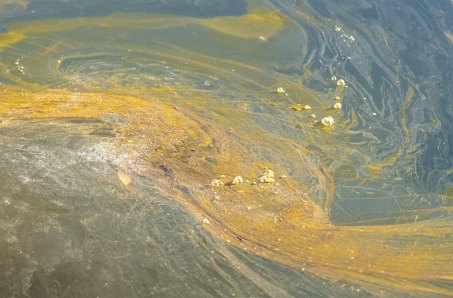
South Australia is confronting an unprecedented, large-scale harmful algal bloom associated with Karenia species, which began in March 2025 and subsequently affected extensive areas of the state's coastal waters. The Karenia bloom is a critical environmental challenge involving fish kills, shellfish mortality, deterioration of water quality and disruption of marine ecosystems.
South Australia's Department for Environment and Water reports that the bloom has affected more than 400 species of fish, sharks, rays, shellfish, seahorses and other marine organisms.
The consequences are therefore both ecological and economic. PIRSA's 2026 assessment reports widespread marine-life mortality and measurable impacts on important fisheries. Although the South Australian Government advises that the Karenia involved does not produce a toxin considered harmful to humans or expected to cause long-term human-health effects, exposure to affected coastal environments can cause temporary skin and eye irritation and respiratory symptoms such as coughing and shortness of breath.
What was done
Untreated sea water from West Lakes was treated by the Hydro2050 system for 15 minutes, with samples taken before treatment, 10 minutes after treatment commenced, and 30 minutes after treatment. Samples were independently analysed by ALS.
Independently analysed by ALS
36,500 to 400
Karenia cells per mL, a 98.9% reduction
73.0 to 0.8
Karenia biovolume in cubic millimetres per litre
Before treatment
36,500 Karenia cells/mL, biovolume 73.0 cubic millimetres per litre. Very high, water quality impaired.
10 minutes after start
8,800 Karenia cells/mL, biovolume 17.6 cubic millimetres per litre. Major reduction, cells appeared unhealthy.
30 minutes after treatment
400 Karenia cells/mL, biovolume 0.8 cubic millimetres per litre. Almost eliminated, remnants unhealthy.
The results
The strongest demonstrated result is the independently tested 98.9% reduction, from 36,500 to 400 cells per mL, under the trial conditions.
The treatment effect was evident very quickly. Within 10 minutes, Karenia had fallen from 36,500 to 8,800 cells/mL, a reduction of 76%. The laboratory also reported that the remaining Karenia cells appeared unhealthy.
Karenia biovolume followed essentially the same pattern, moving from 73.0 to 17.6 to 0.8 cubic millimetres per litre. This is also approximately a 99% reduction in Karenia biovolume, indicating that the result was not simply a change in cell counts but a substantial reduction in the measured biomass of Karenia.
Visibly discoloured West Lakes water before treatment became noticeably clearer after the 15-minute treatment. Dissolved oxygen was also monitored during treatment, with the report showing elevated oxygenation.
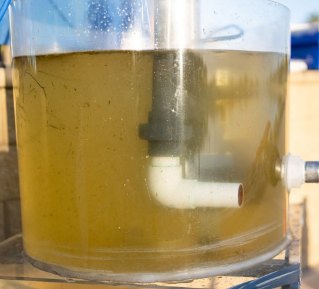
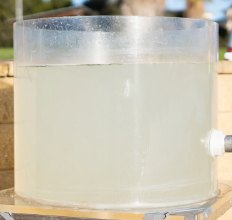
At the initial sample, Karenia overwhelmingly dominated the algal community. At the final sample, where Karenia was reduced to very low levels, the laboratory found a more diverse assemblage of phytoplankton, including diatoms, chlorococcoids and other algal groups.
The impact
The West Lakes trial provides promising proof-of-concept evidence that Hydro2050's oxygen and ozone nanobubble technology can rapidly reduce very high concentrations of Karenia in treated water. The key impact is that it moves the technology from a proposed treatment concept to one supported by independently tested results using water taken directly from an active South Australian bloom.
The significance extends beyond the reduction in cell numbers. Karenia biovolume declined from 73.0 to 0.8 cubic millimetres per litre, while the final sample showed a more diverse and balanced phytoplankton community. The report therefore indicates the potential not only to suppress Karenia but also to help create conditions more conducive to improved ecological balance.
The trial provides a basis for investigating Hydro2050 as a rapid-response intervention for high-risk or high-value waterways, especially when deployed as mobile treatment systems that could be used in response to future bloom events.
Rather than adding a conventional algicide, the Hydro2050 process uses oxygen and ozone nanobubbles, where ozone rapidly reverts to oxygen and leaves no persistent chemical residue. This potentially provides a pathway for treating harmful algae while avoiding some of the environmental concerns associated with conventional chemical treatments.
Dams, lakes and ponds
Water from an active bloom, and a laboratory prepared to put its name to the result.
ALS measured Karenia down from 36,500 to 400 cells per mL across the fifteen minute treatment.